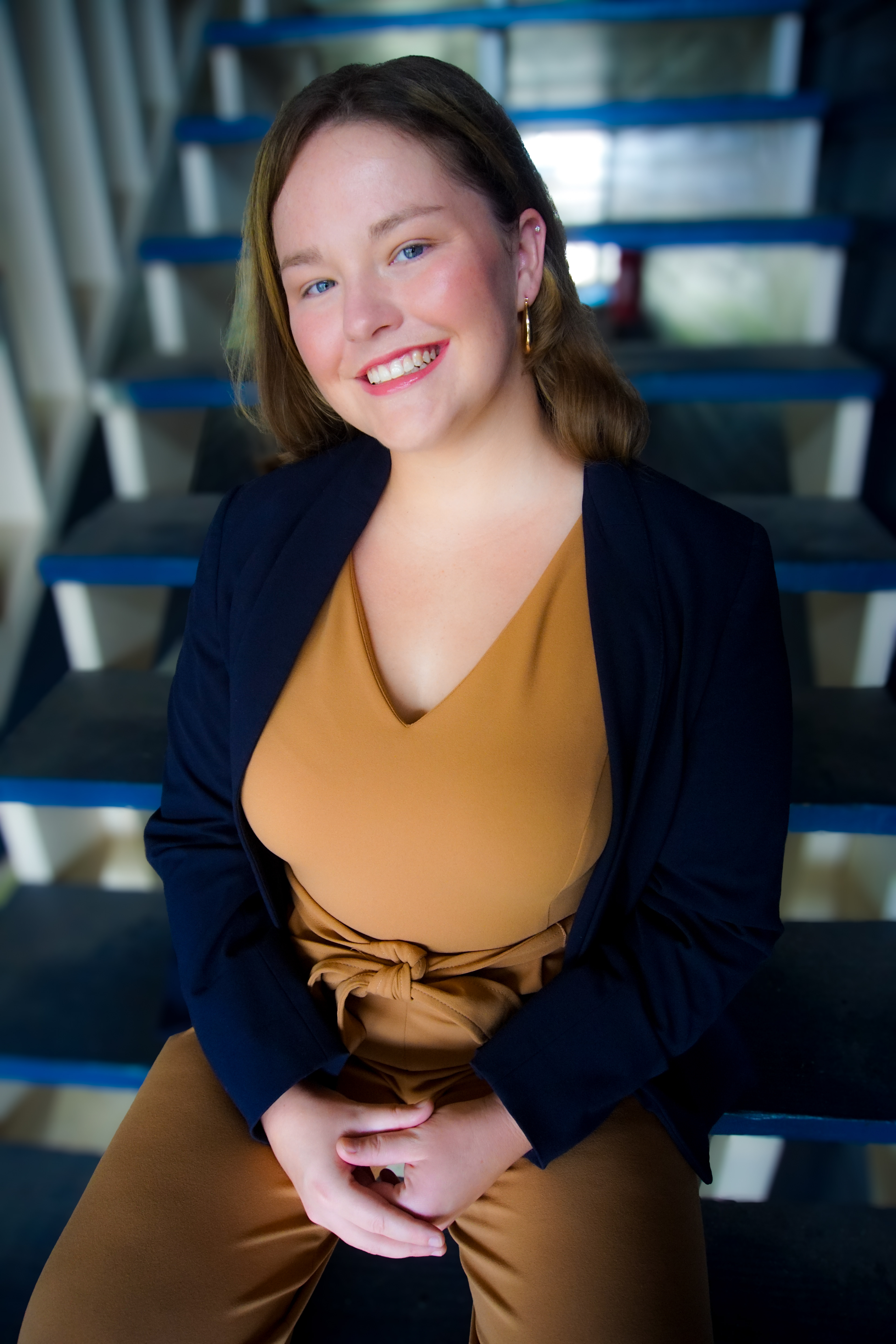
Most of my clients are people making something out of nothing, hoping it will find its people. I know that hope intimately — I built this studio the same way.
I've completed more than 350 projects, some international for markets in Europe and Indonesia. My work has directly contributed to over $2,000,000 in client sales.
Before this, I worked in-house. Three years at the New York State Olympic Regional Development Authority, promoted twice — from Digital Marketing & Sales Associate to Coordinator to Digital Content & Program Manager. I ran season pass campaigns for Whiteface, built email sales strategy across multiple venues, managed the CMS and CRM platforms, and trained other teams on them. I also designed permanent wayfinding and the historic 1932 and 1980 signage still standing at the Lake Placid Olympic Center, and contributed to work recognized with a NYS ADDY Award. That's where I learned to design inside a real operation: stakeholders, approval chains, brand standards, deadlines that don't move.
I'm also a photographer. Ten years of it, with work exhibited at Galerie Gora in Montreal and FotoZA Gallery in Johannesburg, and featured in Dodho Magazine. This matters more to the design work than it sounds like it should — every mockup and composite I build runs on a photographer's read of light, scale, and mood. It's the part of this job a tool can't do for you.
Sustainability is a practice here, not a principle. I studied Environmental Science and Policy at Clarkson University, with a concentration in sustainable solutions for the developing world, and spent four and a half years leading campus sustainability work — an Eco-Rep program, waste-reduction initiatives, and a contribution to an EPA P3 proposal. So when timelines and sustainability compete, I advocate for lower-impact options — FSC or recycled stocks, soy and vegetable-based inks, efficient formats, local printers — even when it means a longer lead time. One motto runs the business: design for the greater good.
On AI, since everyone asks.
I use it, deliberately. Someone can now type a few lines into a chatbot and get a semi-decent graphic in ninety seconds. Work I used to be hired for is gone. That's the honest version, and pretending otherwise doesn't help anyone.
So I made a decision early: rather than compete with these tools or resent them, I'd learn them better than anyone hiring me would. What I found is that AI is very good at generating an asset and very bad at knowing which asset should exist. It has no taste, no restraint, and no idea what your business is actually trying to say. That gap is where my work lives.
I'm not selling pixels anymore — those are cheap now, and I'd lose that fight. I'm selling the thing that got more valuable when the tools got cheaper: knowing what to make, why it matters, and how to finish it properly.
The illustration work is still drawn by hand. That part isn't going anywhere.
Featured in:
I've talked publicly about most of what shapes this practice: where resilience comes from and why it matters to the work, why design is listening rather than taste, how I use AI without letting it do the thinking, and what choosing sustainable materials actually costs when a deadline is close. If you want to know how I work before you hire me, these are the long versions.
Design and Studio
→ Bold Journey — Where Do You Get Your Resilience From?
→ Bold Journey — An Inspired Chat with Georgiann Honey
→ Canvas Rebel — Meet Georgiann Honey
→ Shoutout Miami — Meet Georgiann Honey, Graphic Designer
→ Bold Journey — An Inspired Chat with Georgiann Honey
→ Canvas Rebel — Meet Georgiann Honey
→ Shoutout Miami — Meet Georgiann Honey, Graphic Designer
Photography
→ Galerie Gora — exhibited, Montreal, Canada
→ FotoZA Gallery — exhibited, Johannesburg, South Africa
→ Dodho Magazine — GuruShots Creative Still Life
→ LiveWildly — Weekend in the Corridor: 30A
→ FotoZA Gallery — exhibited, Johannesburg, South Africa
→ Dodho Magazine — GuruShots Creative Still Life
→ LiveWildly — Weekend in the Corridor: 30A
If you've built something worth sharing and have no idea how to make it look like what it is — that's exactly the work I want. Tell me what you're building, and I'll send back a plan, a timeline, and a quote.